Thursday, October 31, 2024

Genre Research on Musicals

Musicals

What is a Musical? 

A musical is a film genre that includes characters singing within the narrative to help tell the story. Musicals combine dancing, singing, and dialogue to create an emotional experience, allowing characters to express themselves in a way that traditional dialogue cannot. The performances within musicals are often uplifting and energetic, filmed in bigger-than-life settings, giving the audience a dream-like feeling. Whether romance, ambition, or overcoming hardships, musicals provide entertainment that attracts the visual and auditory senses. 

Genre Conventions- Content

Several key conventions define content in musicals: songs are main storytelling device; characters sing to reveal their inner thoughts and feelingsIn such a way, in The Sound of Music, Maria sings "The Hills Are Alive" to express her elation and yearning for freedom. Another essential characteristic is dance: staged song and dance numbers heighten the emotional impact and often help to drive the plot. Apart from this, love, self-realization, and conflict reconciliation themes have also been very captivating for the audience and truly motivating.

Character Archetypes 

Character archetypes are also present in musicals: the dreamer who hopes for a change in life; the comic companion who helps to lighten things up, and the love interest. Through music and dance, such characters overcome the obstacles that are confronted with them, thus depicting the message that any obstacles you face in your life can be converted into art.

Genre Conventions- Production Techniques

The most crucial aspect of the production techniques in musicals is how they can be perceived to give an entertaining experience to the audience. The cameras usually capture musicals in bright colors and with fluid camera movement. For example, La La Land uses sweeping footage alongside sharp colors to represent the allure of Los Angeles City and to achieve prestige. Similarly, choreography is also another production factor within musicals since the proper implementation of dancing in storytelling demands long years of planning and performance skills for producing engulfing rhythm and flow in the film.  

Editing

Editing also provides the energy of the musical numbers; fast cuts and fluidity make dance sequences more exciting. Equally important, set design and costuming also establish the film's tone and period, placing audiences in the world where the characters are.

Institutional Conventions – How is Genre Marketed

Most musicals would appeal to the general public because their target audience could include families and any person who likes stories of good feelings with matching songs. Trailers and publicity campaigns generally show hit musical sequences in the movie. Posters use colorful pictures of lead characters striking dynamic poses that depict the movie's energy.

The music itself is a 
strong marketing tool; singles aside from the soundtrack are often released well in advance of the film's debut to create interest and build anticipation. In addition, theatrical versions of popular musicals often enjoy a crossover appeal, with fans of stage productions heading out to see the film version.

Film Sample #1: The Sound of Music (1965)


The Sound of Music is a classic musical that narrates the story of Maria, a free-spirited nun who assumes the role of governess for the children of von TrappIt embodies the genre with its unforgettable numbers, such as "Do-Re-Mi" and "My Favorite Things," pivotal in developing characters and advancing plot action. The choreography in scenes such as the "Sixteen Going on Seventeen" waltz adds much to the romantic tension between characters. Lush cinematography captures the stunning landscapes of Austria, truly making the setting one of the vivid characters in the film.

Film Sample #2: La La Land (2016)


La La Land is a modern musical that narrates the love story between ambitious actress Mia and jazz musician Sebastian. Music travels with the characters through their dreams and disillusions. For example, "City of Stars" is iconic and truly embodies the hopes and ambitions of its characters. This opening number, "Another Day of Sun," is a vibrant celebration of Los Angeles and the pursuit of dreams through its choreography. Color and light use the musical sequences of this film to create an enchanting atmosphere that absolutely draws the audience into the character's journey.

Musicals to Consider: 

West Side Story (1961)


Grease (1978)


Chicago (2002)


 Mamma Mia! (2008)


The Greatest Showman (2017)


High School Musical (2006)


Friday, October 18, 2024

Representation (Modern Family)

 Modern Family Representation

   Modern Family is known and praised for its diverse characters and dynamics. However, underneath all the humor, the show reveals how the media world constructs characters using selection, stereotypes, and othering. This post will explore how the show constructs its cast. I will discuss two of my favorite characters, Cameron Tucker and Gloria Delgado, from the show. 

Gloria Delgado

   Gloria, as played by Sofia Vergara, is often built around the fiery Latina stereotype. Her loudness, passion and thick Colombian accent help paint her into the role of exotic "other" amidst her mostly white family. The show consistently uses methods of exoticizing her cultural attributes for comedic devices. Such selection amplifies aspects of her identity, like beauty and emotional intensity, for the sake of her being presented as a spectacle. Otherwise, this othering, concerning the more subdued nature of the Pritchett family, speaks to more recognizable racial and ethnic stereotypes. This narrow construction does get modified as the series develops, often de-centering Gloria and adding more depth through her character as a protective mother and businesswoman, offering a subtle counter-narrative.

Pictures: https://www.google.com/url?sa=i&url=https%3A%2F%2Fwww.popsugar.com%2Flatina%2Fstages-arguing-your-latina-mom-42590795&psig=AOvVaw3THKRwQO4p9hSRM-kvCdHv&ust=1729370625010000&source=images&cd=vfe&opi=89978449&ved=0CBMQjRxqFwoTCIDw8OLlmIkDFQAAAAAdAAAAABAE


Cameron Tucker

   Another character whose identity is made up of stereotypes, this time of a gay man, is Cameron Tucker, played by Eric Stonestreet. Most often, Cameron is portrayed as the more flamboyant and theatrical partner in his relationship with Mitchell. His love of drama, being effusive and emotionally expressive, plays into familiar media stereotypes of gay men being over-the-top and feminine. This set of characteristics provides a humorous but narrow insight into LGBTQ+ identities, reinforcing some stereotypes that really are reductive. Like Gloria, however, Cameron is also afforded moments that break from these types, particularly in his role as an excellent father and committed partner, adding layers to his character beyond the exaggerated persona.


Representation Beyond Stereotypes

While Modern Family deploys these tropes more conventionally as a means of generating humor, it also permits occasional humanity by Gloria and Cameron to seep out beyond their initial constructions. Gloria's immigrant backstory, her fierce loyalty to her family, and Cameron's nurturing, fatherly qualities complicate initial stereotypes that audiences may expect. These represent the characters breaking through the exoticizing and othering patterns to show that identity is far more complex than the superficial traits that media often highlights. At the same time, however, the show still hasn't nailed the balance between relying on those stereotypes for humor and the deeper, wholesome representation fact that indeed can make this a progressive and problematic piece of media in how it handles race, gender, and sexuality.

Wednesday, October 9, 2024

Sound Project Reflection

 Sound Project Reflection

   During the sound lesson in my AICE Media class, I learned numerous techniques used with sound, and I saw great examples to further aid in understanding the methods. The main focus was on using sound to create emotion and action without using visual elements or dialogue. In addition, we covered foley sounds, which are sounds you hear every day created by random objects. These sounds play a major role in filmmaking. We discussed the history of the Foley art and its origin, too, further enhancing our understanding.

   We were instructed to create a 1-2 minute scene of our choosing. However, we were only allowed to use seven or fewer words of dialogue, so we had to rely largely on sound to create our story. For the project, we had to brainstorm a school-appropriate scene, find sound effects, create at least four of the sounds in a foley stage document in a video of the process, and take pictures of our editing timeline to show our layering while editing. 

   While brainstorming with my partner, we considered a variety of different scenes we could create with sound alone. We thought about scenes that would occur in real life, and we discussed the different kinds of recognizable sounds you would hear. In the end, we decided to pick a scene that would allow us to use various effects without making the plot too difficult to understand, given that the project could only be 1-2 minutes long. We chose a fight breaking out at a football watch party. 

   The outline we created helped me stay organized and on task. Listing out the different scenes and the sounds that would occur really aided me and my partner in staying organized For instance, if I had a scene where someone was leaving a room, I would need the sound of footsteps, the sound of a doorknob turning, the sound of the door opening and then closing. In my outline, I made sure to place those sounds in the correct order in the correct scene. The outline ensured that the process of finding sounds and creating them ran smoothly, ensuring my success in this project. 

   For editing, I used Adobe Premiere Pro to arrange and layer my sounds. It was my first time using Adobe Premiere Pro, so I watched a couple videos that helped me navigate through the editing platform.  We were provided helpful sites to assist in finding all of the different kinds of soundtracks. In addition, I included some sounds from other sites that were not provided to us. However, I ensured and made a mark on the sounds I would create myself, so I didn't require searching those sounds. Adobe Premiere Pro allowed me to combine the sounds and edit them into one smooth sound scene. 

   I did well on selecting all the different kinds of sounds used, and I am pleased with how my foley sounds turned out. However, I could have done a better job in layering and mixing the sounds together in terms of volume and length. I think with more practice, I would be able to reach a more clean final product. 

   Here is the link to my project: https://drive.google.com/file/d/1rc5Qeu3U71UIpitp-tHYAnXgdwlvzP9x/view?usp=sharing 


Thursday, September 26, 2024

One Word Film Reflection

    One Word Film Reflection

  One-Word Film Reflection

   Last week, in my AICE Media class, we were assigned a group project called the "One Word Film.” We were given a word for the project, and we had to create a short film representing it. The challenge was to create and tell a story within 60-90 seconds, using a variety of shots, angles, and editing techniques to convey the meaning of our word to the viewer(s). This had to be done without dialogue and for the film to be an actual story and not a montage. 

   Here is a breakdown of my process and experience: 

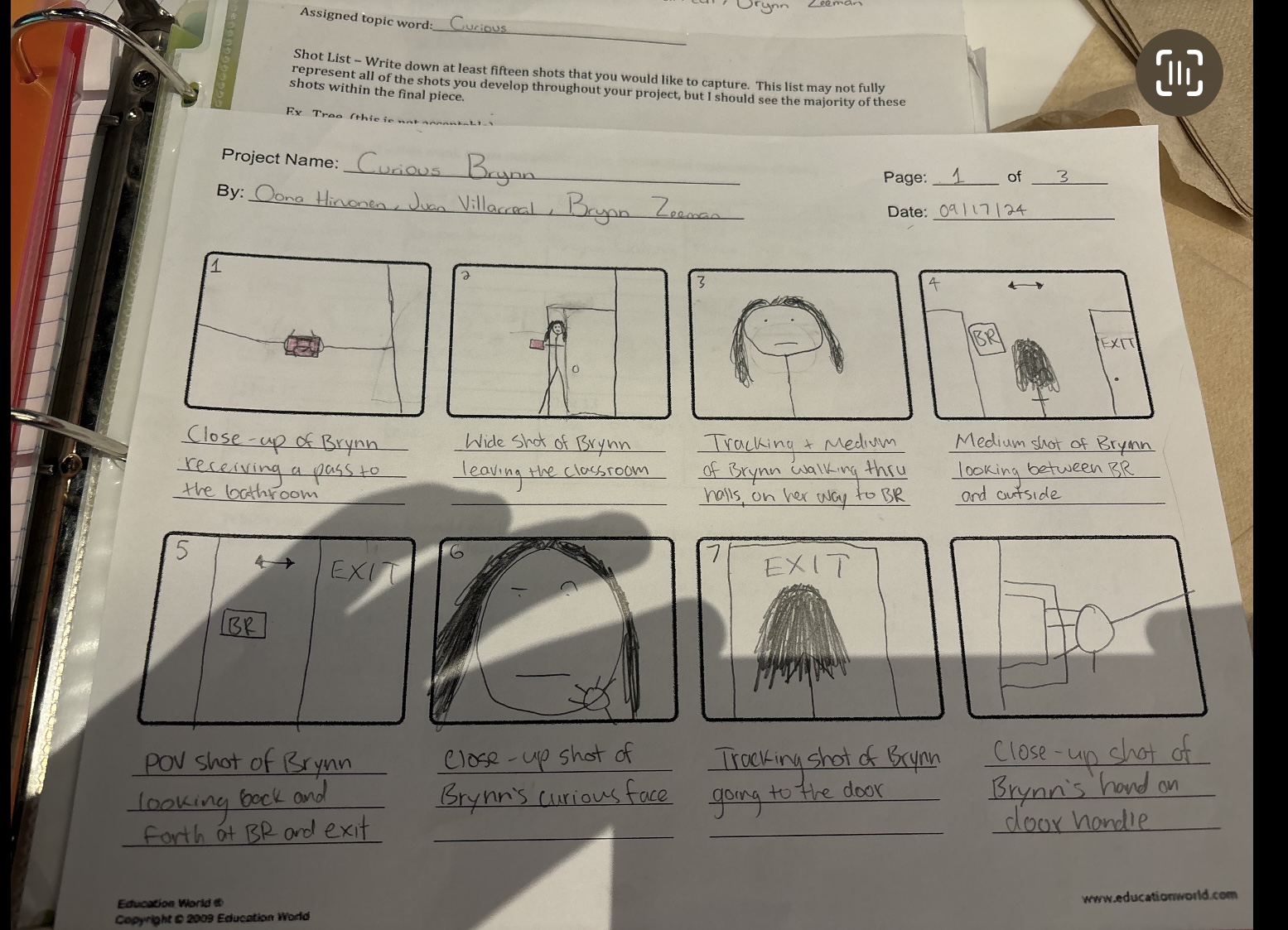
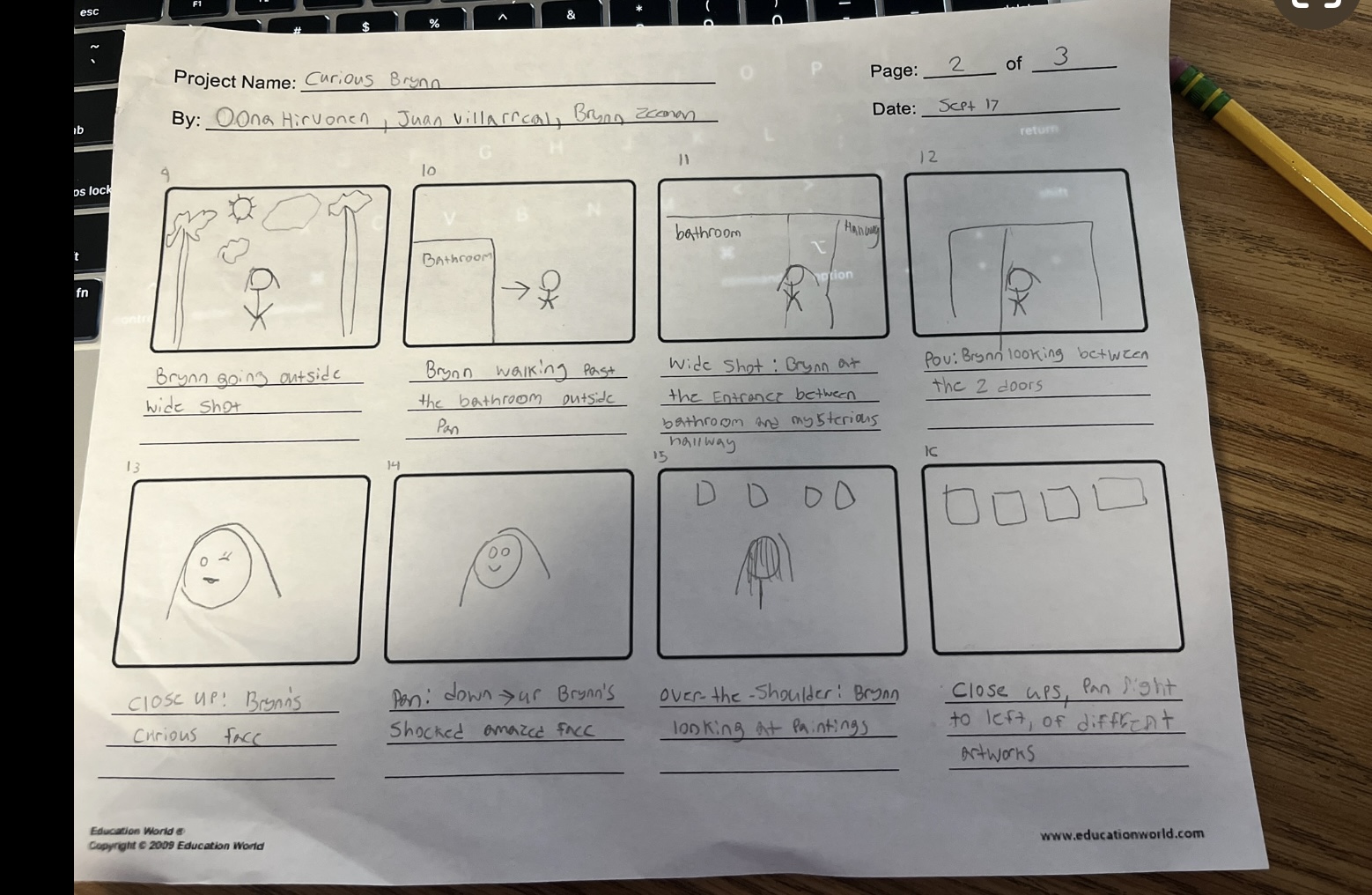
   Once me and my group were assigned a word, which in this case, was the word curious. Me and my group members began brainstorming a possible plot and story we could create, which was a little difficult since we were limited to film during school hours, inside of my school. However, we decided on a girl being fascinated and curious about her surroundings and not going to the bathroom like she was supposed to, but instead, a forbidden building in the school. Afterward, we broke it down into separate shots. Along with the shot list, we discussed possible editing techniques and shot types/angles we could include in our film. We decided to use a variety of shots, but my favorite shots were the close-ups used to portray her curious face. 

   All my editing was done on iMovie; I included some instrumental music, which was allowed since there was no dialogue. In addition, I used a jump cut to portray the time passing by as the girl is curious about her surroundings. Each of my group members, however, had to edit the project, so there may be small differences between our projects   

 Here is a picture of my brainstorming sheets


    This sheet helped me, and my group solidify our ideas and guide us throughout the filming process. However, as we started filming, we realized how certain aspects would simply not work, so we ended up changing some small details around. 
    Overall, I am proud of how my film turned out. I feel as if I and my group used a good amount of different shot types and camera movement techniques. In addition, even though it was my first time editing, I feel as if I did rather well. I learned how to cut and add videos and how to add music and cut the music to fit the story being shown. However, I have room for improvement. For instance, I feel like I could have paced the story a little better and included a larger diversity of camera shots/angles/movements to make the visuals more striking. 
    In conclusion, I genuinely enjoyed completing this project. I learned a ton of great techniques and how to combine techniques with storytelling. Moving forward, I hope I become more comfortable with my editing skills, as well as my pacing, and include an even wider use of camera shots/angles/movements.

  Here is the link to my project: 
https://drive.google.com/file/d/1keX0RarvoKeKvRpBmDo3g-aFD_qTKdvX/view?usp=drive_link


Final!

 Hi blog! Here are my CCRs and film opening.  Film opening: https://drive.google.com/file/d/1zrh2F-9jIusj0cd4z3QW67LMge87-7aW/view?usp=shari...